Why Aluminum Foundry Casting Stays a Leading Option for Lightweight, High-Performance Elements
Aluminum foundry casting has developed itself as a leading technique for producing lightweight, high-performance elements. Its amazing strength-to-weight ratio, coupled with excellent rust resistance, makes it a desirable choice across numerous industries. The adaptability in style and manufacturing procedures improves its appeal. As manufacturers look for sustainable and affordable options, aluminum casting remains to adjust. This increases inquiries about its future role and the arising patterns that might form its usage in advanced applications.
The Strength-to-Weight Advantage of Aluminum
Various products are made use of in casting procedures, aluminum stands out due to its exceptional strength-to-weight ratio. This home makes aluminum an optimal choice for industries that focus on performance and efficiency, such as aerospace and auto. The lightweight nature of aluminum permits lowered fuel consumption and raised payload capacity, crucial in open markets. Additionally, aluminum's high toughness assurances that elements can stand up to considerable stress and stress, preserving structural stability without adding unnecessary weight. This mix of stamina and lightness makes it possible for designers to make cutting-edge products that improve efficiency while lessening energy usage. The flexibility of aluminum permits for complex forms and designs, broadening its applications throughout numerous industries. As producers remain to look for materials that add to sustainability and performance, aluminum's strength-to-weight advantage stays a vital aspect in its enduring appeal in foundry casting.
Extraordinary Corrosion Resistance and Longevity
Rust resistance is among aluminum's most considerable features, making it an excellent option for foundry casting applications. Aluminum's all-natural oxide layer supplies a safety barrier that stops damage from ecological factors such as dampness, salt, and numerous chemicals. This integral residential property permits aluminum parts to keep their architectural stability and look gradually, also in severe problems.
In addition, aluminum's sturdiness expands its lifespan, lowering the requirement for constant replacements and upkeep. This characteristic is especially beneficial in industries such as automobile and aerospace, where components are exposed to severe settings. The light-weight nature of aluminum, integrated with its rust resistance, assurances that components can perform reliably without adding unnecessary weight.
Versatility in Design and Production
As the need for ingenious services in various sectors grows, aluminum foundry casting demonstrates impressive convenience in style and manufacturing. This method enables the production of complicated geometries and intricate information that are commonly challenging to accomplish with other products or methods. Aluminum's light-weight nature combined with its capacity to be built right into different shapes makes it ideal for applications varying from automobile parts to aerospace structures.
Aluminum foundry casting supports a vast range of layout adjustments, allowing suppliers to tailor items to specific performance needs and looks. The adaptability of aluminum alloys additionally improves this procedure, enabling the optimization of mechanical residential or commercial properties based upon the desired application.
This flexibility not just streamlines the design procedure yet likewise facilitates quick prototyping, making it possible for faster market entry for ingenious items. Inevitably, aluminum foundry casting remains a favored option for designers looking for performance without sacrificing quality in element style.

Cost-Effectiveness and Performance in Manufacturing
Aluminum foundry casting not only uses layout convenience however also supplies significant cost-effectiveness and efficiency in manufacturing. This method permits the development of complex shapes with marginal product waste, minimizing general expenses. The low melting point of aluminum requires less energy compared to other metals, adding to reduced operational expenses. In addition, the quick manufacturing cycles related to aluminum casting facilitate quicker turn-around times, allowing producers to fulfill market demands efficiently.
In addition, the ability to generate big amounts in a solitary run decreases labor expenses and boosts productivity. Using innovative casting modern technologies, such as sand casting and pass away casting, enhances the manufacturing procedure, ensuring consistent high quality and efficiency (Aluminum Foundry). In general, these variables make aluminum foundry casting an economically sensible option for companies looking for light-weight, high-performance components while enhancing their production efficiency
Ecological Benefits of Aluminum Casting
Aluminum casting offers substantial ecological advantages, mostly as a result of the material's high recyclability. This process typically requires much less power contrasted to various other metals, adding to a lower general power consumption. Additionally, using aluminum can cause a lowered carbon footprint, making it an extra sustainable option in production.
Recyclability of Aluminum
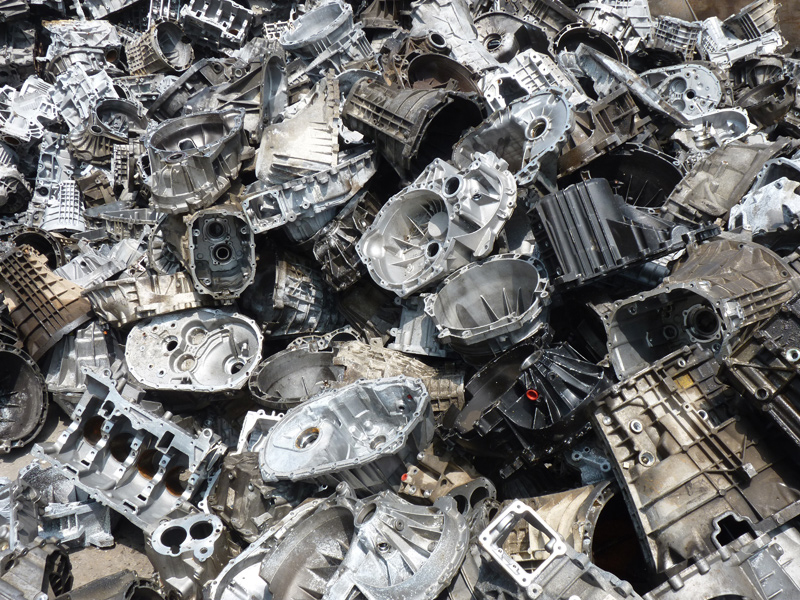
While the production of aluminum involves substantial energy usage, its impressive recyclability provides significant ecological benefits. Aluminum can be recycled forever without shedding its residential properties, making it a sustainable choice for different applications. The reusing process needs just a portion of the power required for primary production, consequently lowering total carbon emissions and saving natural deposits. This capacity to reclaim and reuse aluminum not only lessens waste in land fills yet additionally sustains a circular economic climate. In addition, the prevalent schedule of well-known recycling programs and centers facilitates the efficient recovery of aluminum scrap. Consequently, the recyclability of aluminum contributes considerably to environmental sustainability, lining up with the expanding need for environmentally friendly production procedures in the foundry market.
Reduced Energy Consumption
The reduced energy intake connected with aluminum casting offers substantial ecological advantages, additionally boosting the metal's sustainability account. Unlike other metal casting procedures, aluminum casting calls for less power throughout its lifecycle. The melting factor of aluminum is fairly low, which means that much less gas is needed for heating contrasted to much heavier metals. Furthermore, aluminum's excellent thermal conductivity permits effective warmth transfer during casting, lowering energy loss. This performance translates right into lower functional prices and a minimized environmental impact. The ability to recycle aluminum several times without degrading its homes adds to overall energy cost savings. By choosing aluminum casting, sectors can adopt an extra sustainable technique, balancing efficiency requires with i loved this ecological obligation.
Lowered Carbon Impact
Applications Across Numerous Industries
Aluminum foundry casting offers a crucial role throughout countless sectors, showcasing its convenience and flexibility. In the automobile industry, it is employed for manufacturing light-weight parts, improving fuel performance and efficiency. Aerospace applications profit from aluminum castings due to their high strength-to-weight proportion, which adds to enhanced aircraft efficiency.
In the electronic devices market, aluminum castings are used for real estate and warm sinks, supplying outstanding thermal conductivity and security for sensitive parts. aluminum casting. The construction field makes use of aluminum castings for different structural and building components, making certain durability and aesthetic appeal
In addition, the medical sector incorporates aluminum castings for customized equipment, where precision and reliability are critical.
Future Fads in Aluminum Foundry Casting
As sectors develop, the future of aluminum foundry casting is poised for considerable improvements driven by technical innovations and enhancing sustainability needs. One notable fad is the assimilation of automation and robotics, enhancing precision and effectiveness in casting processes. This change not only minimizes labor costs however additionally reduces human mistake, leading to better outputs.
Furthermore, advancements in alloy advancement are anticipated to yield lighter and more powerful products, even more broadening the applications of aluminum castings. The adoption of environmentally friendly techniques, such as making use of recycled aluminum and energy-efficient melting strategies, straightens with international sustainability objectives, attracting ecologically conscious consumers.
Additionally, the surge of additive manufacturing technologies is likely to enable much more intricate geometries and tailored layouts, broadening design possibilities. Jointly, these patterns that site suggest a dynamic future for aluminum foundry casting, placing it as a vital component in the manufacturing of ingenious, lightweight, and high-performance parts throughout different markets.
Often Asked Inquiries
Exactly How Does Aluminum Casting Contrast to Various Other Materials in Performance?
Aluminum casting generally uses superior strength-to-weight ratios, outstanding rust resistance, and far better thermal conductivity compared to lots of other products. It enables for detailed layouts and cost-effective manufacturing, making navigate to these guys it a favored option in numerous applications.
What Are the Temperature Limits for Aluminum Cast Parts?
Aluminum cast elements generally hold up against temperature levels approximately 400 ° F (204 ° C) for prolonged usage, although specific alloys might withstand higher temperature levels (Precision aluminum casting). Yet array, homes like stamina and ductility may substantially degrade, impacting total efficiency
Can Aluminum Casting Be Recycled, and Just how?
Aluminum casting can be recycled successfully. Scrap aluminum is melted down, purified, and changed into brand-new items, considerably lowering power consumption and ecological impact contrasted to primary aluminum manufacturing, thereby advertising sustainability in manufacturing procedures.
What Are the Common Problems in Aluminum Foundry Casting?
Typical problems in aluminum foundry casting consist of porosity, contraction, misruns, cool shuts, and surface blemishes. These issues can develop from poor putting strategies, inappropriate temperature control, or contamination during the casting procedure, influencing total top quality.
The length of time Does It Typically Take to Create Aluminum Castings?
Usually, creating aluminum castings takes between a few days to several weeks. Factors include mold complexity, production quantity, and the specifics of the casting process, affecting the total timeline for completion.
As the need for cutting-edge remedies in various sectors expands, aluminum foundry casting demonstrates remarkable flexibility in layout and production. Aluminum foundry casting not only uses layout flexibility but likewise provides considerable cost-effectiveness and effectiveness in production. Unlike various other metal casting procedures, aluminum casting calls for much less power throughout its lifecycle. Aluminum casting is naturally much more sustainable compared to various other materials due to aluminum's recyclability and lower discharges during production. Recycled aluminum needs just 5% of the energy needed for key aluminum manufacturing, considerably decreasing greenhouse gas exhausts.